Services are organized around the questions buyers ask before releasing a purchase order: which process is sensible, what drawing details need review, which material route is stable, how inspection will be recorded, and how a prototype can become a repeatable build.
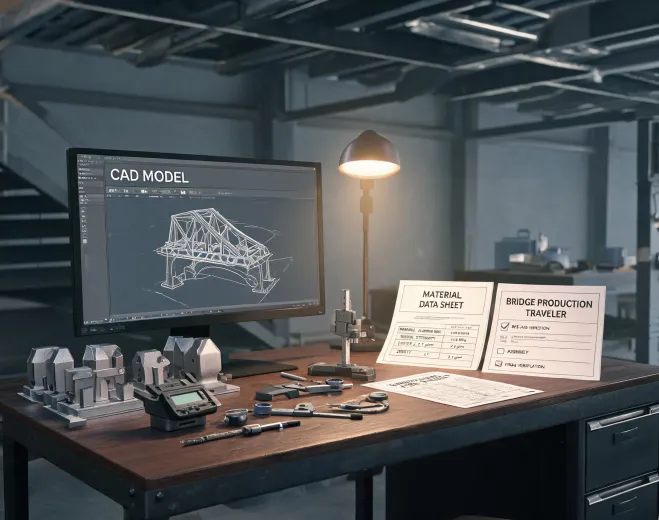
Formlabs is best used when a team wants help translating a CAD package into a manufacturing decision. The service desk checks geometry, clarifies tolerances, flags support and orientation issues, and identifies where additive tooling, low-volume parts, or bridge production can reduce delay. Each service card below can stand alone, but most programs use several together: an intake review, DFM comments, first article inspection, and a repeatable release pack for purchasing.
Production aids, assembly nests, soft tooling, fixtures, gauges, and trim tools built for fit checks and operator handling.
Custom covers, brackets, guards, service components, and machine-side accessories reviewed for load, heat, and fit.
Prototype-to-pilot lots with controlled routing, lot notes, material tracking, and release assumptions for repeat orders.
Dimensional summaries, FAI style notes, material certificates, and revision records when procurement needs evidence.
Readable recommendations on wall thickness, critical dimensions, surface finish, support strategy, and tolerance risk.
Comparison of resins, powders, reinforced materials, and finishing routes against environment and service life.
A typical request starts with a STEP file and a short note. Within the review, Formlabs separates fixed requirements from open choices. Fixed requirements might include a mounting interface, maximum envelope, food-contact material request, or inspection dimension. Open choices might include build orientation, surface finish, insert strategy, or whether a pilot lot should use the same route as recurring production. This distinction is useful because it lets engineering approve the right details while purchasing compares a clean quote.
The difference is not a prettier quote. It is a better manufacturing conversation. A raw RFQ often hides assumptions about material, inspection, and schedule. A controlled release package shows what will be built, what will be checked, and what should change before scaling.
Include files, target date, expected annual volume, and any regulated documentation requirements. Formlabs will respond with the questions that matter before a build starts.