This page explains what the quote desk needs, how files are reviewed, and how a buyer can move from a first prototype to a documented production order. It is designed for friendly, fast intake without hiding the engineering details that decide cost and lead time.
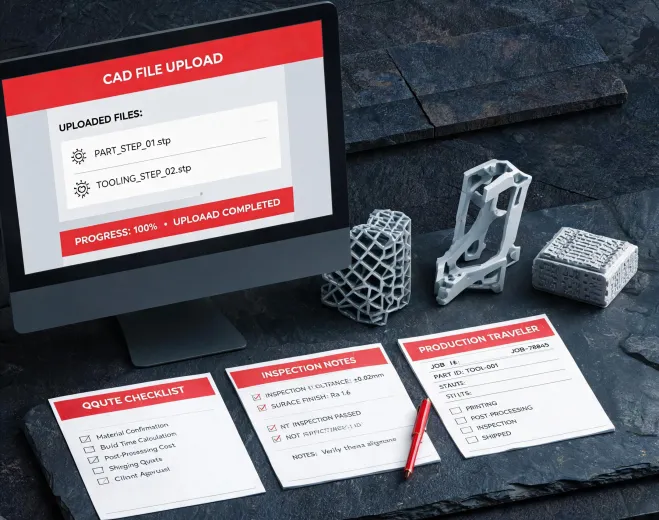
Formlabs asks for enough information to make the quote meaningful without forcing your team to finish every decision alone. The best first package includes a 3D file, drawing if available, material preference, target quantity, application notes, and any inspection or certificate expectations.
Send STEP, STP, IGES, STL, 3MF, PDF drawings, photos, or a short note about the production problem.
Formlabs checks units, revision, material, tolerance, cosmetic needs, annual volume, and whether any features need special attention.
The quote separates prototype, pilot, and recurring quantities when that helps purchasing compare real options.
Approved builds can include inspection notes, material certificates, packaging requests, and repeat-order assumptions.
A drawing is useful, but the real goal is context. Tell Formlabs how the component is used, what surfaces matter, whether the part contacts heat or chemicals, how many pieces you expect in the next order, and what your receiving team needs to verify. If a file is incomplete, the response can still identify what is missing.
STEP, STP, IGES, STL, OBJ, 3MF, and native exports when a neutral file is not available.
PDF drawings with critical dimensions, GD&T, surface finish, inserts, thread callouts, and revision references.
Annual volume, target lead time, assembly use, environment, inspection level, and packaging or labeling needs.
Instant quote does not mean automatic approval of a risky design. Formlabs can move quickly because the intake workflow separates the questions that affect manufacturability from the questions that affect commercial planning. If a wall is too thin, a tolerance is not realistic for the selected route, or a material may not survive the environment, those issues should appear before the order is released. If the part is ready, the team can move directly to schedule, documentation, and shipping details.
Use the notes field for material, quantity, timeline, inspection, and application context. A concise request is enough to begin.